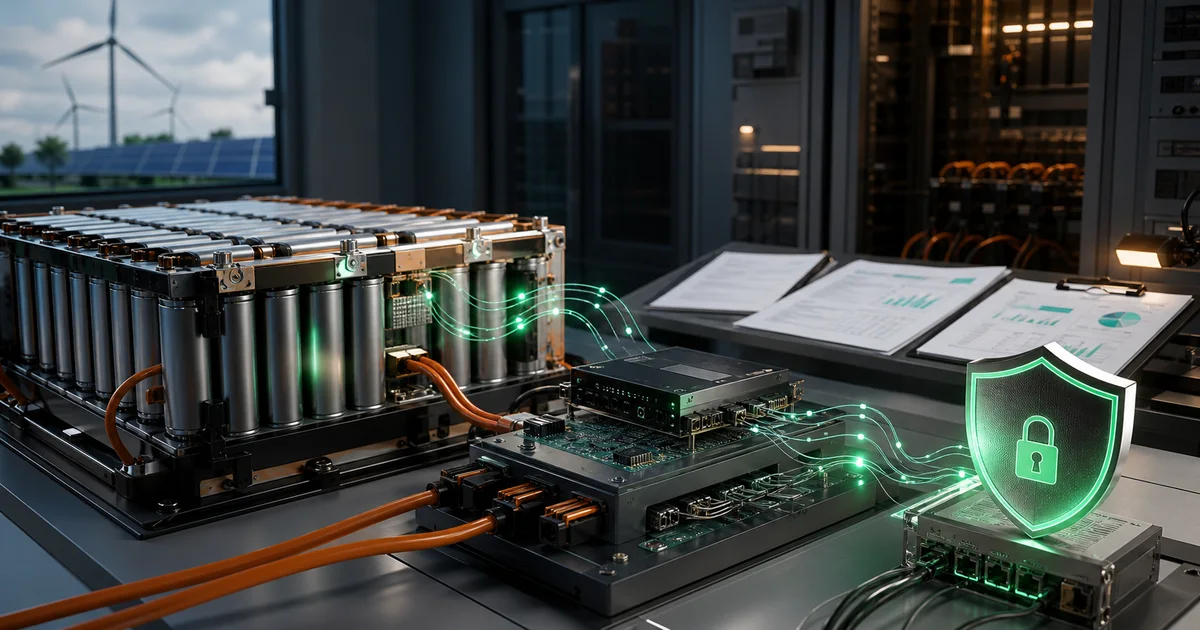
From Energy Storage to Charging Stations: Understanding How CRA Impacts the New Energy Industry
Introduction
The digital transformation of the new energy industry is accelerating rapidly. Energy Storage Systems (ESS), smart inverters, electric vehicle charging stations, and similar products are evolving from simple power conversion devices into intelligent terminals with remote monitoring, data collection, and cloud-based management capabilities.
This transition brings new challenges: cybersecurity.
The European Union’s Cyber Resilience Act (CRA) brings products with digital elements under mandatory regulatory scope. For professionals in the new energy industry, understanding the CRA’s impact and response strategies has become essential for products entering the EU market.
Key Takeaway: Most new energy products fall under the CRA’s Default Category, with a compliance path of Module A (internal control), estimated cost of €10K-25K, and timeline of 8-10 weeks.
Why Are New Energy Products Subject to CRA Regulation?
Digital Feature Analysis
The CRA applies to products “with digital elements” that are “directly or indirectly connected to a device or network.” The following characteristics of new energy products bring them within the CRA’s regulatory scope:
| Product Type | Digital Features | Typical Connection Methods |
|---|---|---|
| Energy Storage Systems (ESS) | EMS monitoring, cloud management, remote control | Ethernet, 4G/5G, Modbus |
| Smart Inverters | Firmware updates, data collection, grid communication | Wi-Fi, Ethernet, RS485 |
| EV Charging Stations | Payment processing, user authentication, cloud billing | 4G, Ethernet, Bluetooth |
Regulatory Logic
The CRA’s core logic is: connection equals risk. Any device that can be remotely accessed or controlled over a network could become an entry point for cyber attacks, potentially affecting user safety, data privacy, or even grid stability.
Although new energy products are not traditional IT equipment, their network connectivity exposes them to similar cybersecurity risks:
- Energy storage systems being compromised could lead to battery overcharging and fire
- Inverters being tampered with could affect grid stability
- Charging stations being attacked could leak user payment information
Energy Storage Systems (ESS)
Product Overview
Energy Storage Systems are systems capable of storing electrical energy and releasing it when needed. Typical components include:
ESS System Components
├── Battery System (battery modules, BMS, thermal management)
├── Power Conversion System (PCS, DC/DC, DC/AC)
├── Energy Management System (EMS controller, communication modules)
└── Distribution & Protection System (switchgear, protective relays)
Cybersecurity Boundaries
The cybersecurity functions of ESS are primarily concentrated in the EMS (Energy Management System):
| Interface | Security Considerations |
|---|---|
| HMI/Local Touchscreen | Authentication, session timeout, password policies |
| Modbus/RS485 | Protocol security, input validation |
| Ethernet/LAN | Network segmentation, access control lists |
| Cloud Communication | Encrypted channels (VPN/TLS), certificate management |
| Firmware Updates | Signed updates, secure boot, rollback protection |
CRA Classification Conclusion
All types of ESS belong to Default Category
Rationale:
- ESS is not listed in CRA Annex III (Important Class)
- The network functionality of ESS manages its own cybersecurity rather than that of other devices
- Application scenarios (including grid-level) do not determine CRA classification
Compliance Path: Module A (Internal Control) Estimated Cost: €10K-25K Estimated Time: 8-10 weeks
Inverters
Product Types
Photovoltaic inverters are classified by application scenario:
| Type | Power Range | Typical Applications |
|---|---|---|
| Residential Inverters | 3-10kW | Residential PV systems |
| Commercial Inverters | 10-100kW | Industrial and commercial rooftops |
| Utility-Scale Inverters | 100kW+ | Large-scale PV power plants |
Cybersecurity Considerations
Key cybersecurity concerns for smart inverters:
-
Firmware Security
- Secure boot mechanism
- Firmware signature verification
- Secure update channels
-
Communication Security
- Modbus/RS485 protocol security
- Ethernet communication encryption
- Cloud platform connection security
-
Access Control
- Local HMI authentication
- Remote access authorization
- Administrator privilege separation
CRA Classification Conclusion
All types of inverters belong to Default Category
Rationale:
- The network functionality of inverters is to monitor and optimize their own operation
- Does not involve managing the cybersecurity of other devices
Compliance Path: Module A Estimated Cost: €10K-25K
EV Charging Stations
Product Types
| Type | Power Range | Charging Time | Typical Scenarios |
|---|---|---|---|
| AC Slow Charging | 3.7-22kW | 4-12 hours | Home, office |
| DC Fast Charging | 50-150kW | 20-60 minutes | Public charging stations |
| Ultra-Fast Charging | 150-350kW | 10-20 minutes | Highway locations |
Compliance Challenges
The CRA compliance challenges faced by charging stations mainly come from:
-
Payment Data Processing
- Compliance with payment security requirements (PCI-DSS)
- Protection of user payment information
-
User Identity Authentication
- RFID/NFC card security
- User account protection
-
Network Communication Security
- Communication with vehicles (ISO 15118)
- Encryption of communication with cloud platforms
CRA Classification Conclusion
All types of electric vehicle charging stations belong to Default Category
Rationale:
- Charging stations are not listed in CRA Annex III
- The network functionality of charging stations is for charging management and payment, not cybersecurity management
- Payment functionality does not constitute a cybersecurity management function
Note: Charging stations may also need to comply with PCI-DSS (Payment Card Industry Data Security Standard) requirements, but this is independent from CRA.
Compliance Path: Module A Estimated Cost: €10K-25K
Compliance Costs and Timeline
Typical Costs for New Energy Products
| Product Category | Estimated Cost | Estimated Time | Compliance Path |
|---|---|---|---|
| ESS Energy Storage | €10K-25K | 8-10 weeks | Module A |
| Inverters | €10K-25K | 8-10 weeks | Module A |
| EV Charging Stations | €10K-25K | 8-10 weeks | Module A |
Cost Breakdown
Compliance Cost Breakdown
├── Technical Documentation Preparation (30-40%)
│   ├── Risk Assessment Report
│   ├── Technical Documentation
│   └── User Instructions
├── Testing and Verification (40-50%)
│   ├── Cybersecurity Testing
│   ├── Vulnerability Assessment
│   └── Penetration Testing (optional)
└── Certification Fees (10-20%)
    ├── Declaration of Conformity
    └── Technical File Review
Industry Response Strategies
Short-Term Preparation (2026)
-
Product Inventory
- Confirm which products are exported to the EU
- Assess the network connectivity capabilities of products
- Determine CRA classification of products
-
Gap Assessment
- Evaluate existing designs against CRA requirements
- Identify security features that need improvement
- Plan technical documentation checklist
-
Resource Planning
- Budget for compliance costs
- Allocate R&D resources
- Select certification partners
Medium to Long-Term Development (2027 and beyond)
-
Secure Development Lifecycle
- Establish SDL processes
- Integrate security testing into development workflow
- Regular security training
-
Vulnerability Management Mechanism
- Establish vulnerability disclosure channels
- Design secure update distribution mechanisms
- Develop incident response plans
-
Continuous Compliance
- Regular risk assessments
- Continuous security monitoring
- Timely updates to security measures
Key Takeaways
- Most new energy products belong to Default Category, with relatively simple compliance paths and controllable costs
- ESS, inverters, and charging stations have estimated compliance costs of €10K-25K, with a timeline of 8-10 weeks
- Cybersecurity focus areas are EMS, communication interfaces, and firmware updates, requiring special attention
- Payment functionality (such as in charging stations) also requires compliance with additional standards like PCI-DSS
- Recommendation to begin preparation in 2026, allowing sufficient time for compliance modifications
Further Reading
CRA compliance is a necessary condition for new energy products to enter the EU market. If you need:
- Product classification assessment
- Gap analysis
- Compliance path planning
- Technical documentation preparation
Welcome to consult our professional team for targeted CRA compliance support.