SL1 to SL4: Understanding IEC 62443 Security Levels
One of the most misunderstood aspects of IEC 62443 is the Security Level system. Many organizations default to “the highest level” without considering whether it’s appropriate for their threat environment. This leads to over-engineered solutions, unnecessary costs, and sometimes, systems that don’t work as intended.
What Are Security Levels?
Security Levels (SL) in IEC 62443 represent the increasing resistance of a system to intentional or accidental cyber security violations. Think of them as security capability ratings—not as goals in themselves.
The Core Concept
Security Level Definition:
"The capability of a system to resist intentional or accidental cyber security violations,
 considering the attacker's resources, expertise, and motivation."
Key point: Security levels are about resistance capability, not about preventing all attacks.
The Four Security Levels Explained
SL1: Protection Against Casual or Coincidental Violations
Characteristics:
- Protects against accidental or inexperienced actions
- Assumes no intentional attack or very low-skill attempts
- Basic security measures
- Often called “good hygiene”
Typical Measures:
| Capability | Example Implementation |
|---|---|
| Access Control | Simple password protection |
| System Integrity | Basic error checking |
| Data Protection | No specific requirements |
| Use Control | Limited or no restriction |
When to Use SL1:
- Non-critical monitoring systems
- Test environments
- Systems with no external connectivity
- Educational/demonstration setups
When NOT to Use SL1:
- Production control systems
- Anything connected to the internet
- Systems with safety implications
SL2: Protection Against Simple Intentional Violations
Characteristics:
- Protects against simple intentional attacks
- Assumes attacker has:
- Low to moderate motivation
- Basic tools and knowledge
- Limited resources
- Most common target for industrial systems
Typical Measures:
| Capability | Example Implementation |
|---|---|
| Access Control | Unique user IDs, password policies, failed login lockout |
| System Integrity | Cryptographic verification, secure boot |
| Data Protection | Password storage, sensitive data encryption |
| Use Control | Role-based access control |
| Network Security | Network segmentation, firewalls |
| Event Response | Security logging, basic audit trails |
When to Use SL2:
- Most industrial control systems
- Standard commercial products
- Systems with internet connectivity but no critical infrastructure
- Manufacturing execution systems
Real-World Example:
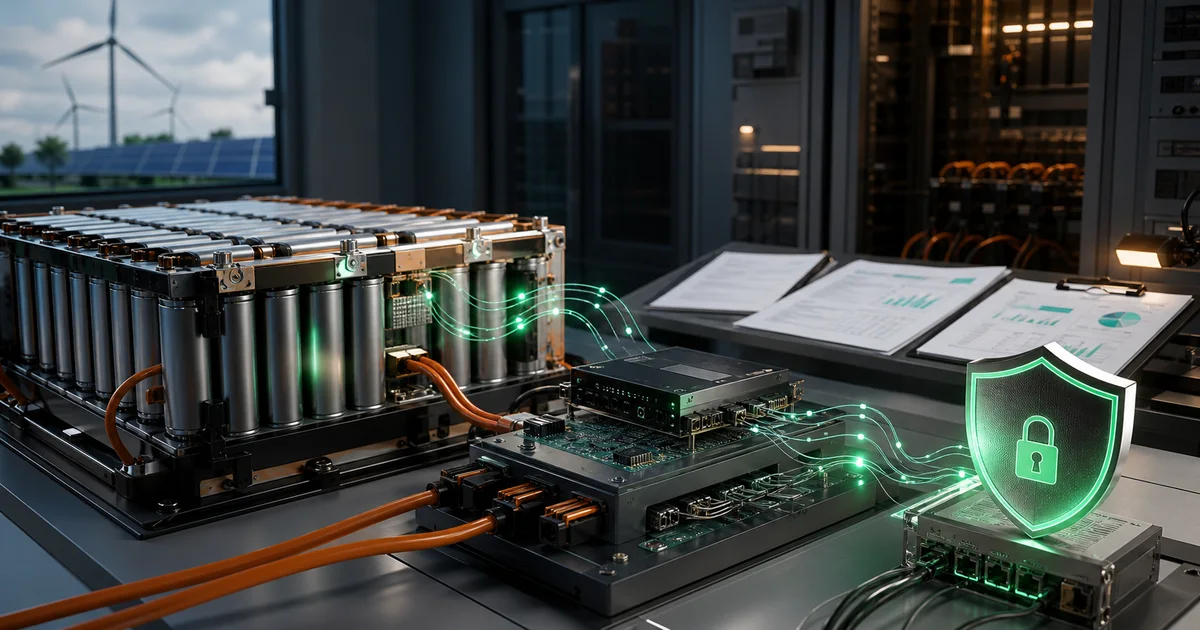
A battery energy storage system (BESS) EMS at a commercial facility:
- Connected to cloud for monitoring
- Controls charging/discharging but no safety-critical functions
- SL2 provides appropriate protection against:
  • Automated scanners
  • Script kiddies
  • Low-skill attackers
SL3: Protection Against Sophisticated Intentional Violations
Characteristics:
- Protects against determined, skilled attackers
- Assumes attacker has:
- High motivation
- Significant expertise
- Substantial resources
- Time to plan and execute
- Common requirement for critical infrastructure
Typical Measures (Everything from SL2 PLUS):
| Capability | Additional Requirements |
|---|---|
| Access Control | Multi-factor authentication, secure authentication protocols |
| System Integrity | Hardware root of trust, formal verification |
| Data Protection | End-to-end encryption, key management systems |
| Use Control | Mandatory access control, strict privilege separation |
| Network Security | Defense in depth, intrusion detection/prevention |
| Event Response | Comprehensive logging, real-time monitoring, incident response |
When to Use SL3:
- Critical infrastructure (power grids, water treatment)
- Systems with national security implications
- High-value targets (large-scale manufacturing, chemical plants)
- Grid-connected energy storage systems
Real-World Example:
A grid-scale BESS providing frequency regulation:
- Direct connection to transmission system operator
- Attacker could cause grid instability
- SL3 provides protection against:
  • Advanced persistent threats (APTs)
  • Sophisticated insider threats
  • Well-funded criminal organizations
SL4: Protection Against Advanced Intentional Threats
Characteristics:
- Protects against nation-state level threats
- Assumes attacker has:
- Unlimited resources
- World-class expertise
- State sponsorship
- Long-term access/entrenchment
- Very rare in commercial applications
When to Use SL4:
- Nuclear facilities
- Defense systems
- Highly sensitive government infrastructure
- Systems where failure has catastrophic national consequences
Reality Check: Most organizations should NOT target SL4. The cost and complexity are extreme, and if you’re facing a nation-state threat, you have bigger problems than technical security measures alone can solve.
Choosing the Right Security Level
The Selection Framework
┌─────────────────────────────────────────────────────────────────┐
│                    Security Level Selection Framework            │
├─────────────────────────────────────────────────────────────────┤
│                                                                  │
│  1. Identify Consequences                                       │
│     └─ What happens if the system is compromised?                │
│                                                                  │
│  2. Identify Threat Sources                                      │
│     └─ Who might attack this system and why?                     │
│                                                                  │
│  3. Assess Attacker Capabilities                                 │
│     └─ What resources and expertise do they have?                │
│                                                                  │
│  4. Consider System Constraints                                  │
│     └─ What security measures can the system actually support?   │
│                                                                  │
│  5. Select Target Level                                          │
│     └─ Choose SL based on 1-4 above                              │
│                                                                  │
└─────────────────────────────────────────────────────────────────┘
Consequence-Based Guidance
| Consequence Category | Typical SL Target | Example |
|---|---|---|
| Inconvenience, minor cost | SL1 | Informational display |
| Equipment damage, moderate cost | SL2 | Manufacturing line |
| Safety impact, environmental damage | SL3 | Chemical plant control |
| Catastrophic, national impact | SL4 | Nuclear facility |
Threat-Based Guidance
| Attacker Profile | Typical SL Target | Example Motivation |
|---|---|---|
| None/Accidental | SL1 | Errors, mistakes |
| Low-skill attackers, opportunists | SL2 | Automated scanning, vandalism |
| Skilled attackers, criminals | SL3 | Financial gain, activism |
| Nation-states, APTs | SL4 | Espionage, warfare |
Common Mistakes to Avoid
Mistake 1: “Higher is Better”
Reality: Higher levels cost more and may reduce usability.
Example: Multi-Factor Authentication
SL2: Password + optional token → Acceptable friction
SL3: Required MFA → Higher security but:
  • May delay emergency response
  • Requires token management
  • Adds operational complexity
Mistake 2: One Size Fits All
Reality: Different components may require different levels.
Correct Approach:
┌─────────────────────────────────────┐
│  Energy Storage System              │
│  ┌──────────────┐                   │
│  │ Cloud Platform│  SL3             │
│  │ (Internet-facing)│               │
│  └──────────────┘                   │
│         │                           │
│         ▼                           │
│  ┌──────────────┐                   │
│  │     EMS      │  SL2              │
│  │  (Internal)   │                  │
│  └──────────────┘                   │
│         │                           │
│         ▼                           │
│  ┌──────────────┐                   │
│  │  Local HMI   │  SL1 or SL2       │
│  │ (On-site)    │                   │
│  └──────────────┘                   │
└─────────────────────────────────────┘
Mistake 3: Ignoring System Capabilities
Reality: You can’t achieve SL3 on hardware that only supports SL1.
Example: Legacy Controller
Hardware: 20-year-old PLC
Capabilities: No secure boot, limited processing power
Reality: Cannot meaningfully achieve above SL1
Solution: Compensating controls (network isolation, physical security)
Practical Examples
Example 1: Commercial Building EMS
| Factor | Assessment |
|---|---|
| Consequence | Equipment damage, business disruption |
| Threat | Disgruntled employees, opportunistic attackers |
| Capability | Standard IT security measures |
| Target SL | SL2 |
Example 2: Grid-Connected Battery Storage
| Factor | Assessment |
|---|---|
| Consequence | Grid instability, potential cascading failure |
| Threat | Criminal organizations, hacktivists |
| Capability | Industrial-hardened equipment, security budget |
| Target SL | SL3 |
Example 3: Test Bench Setup
| Factor | Assessment |
|---|---|
| Consequence | None (test environment) |
| Threat | None (isolated network) |
| Capability | Limited security features |
| Target SL | SL1 |
Security Level vs. Maturity Level
Don’t confuse Security Levels (SL) with Maturity Levels (ML):
| Aspect | Security Level (SL) | Maturity Level (ML) |
|---|---|---|
| What it measures | Technical security capability | Process maturity |
| Where defined | IEC 62443-3-3, 4-2 | IEC 62443-4-1 |
| Target audience | System integrators, product developers | Process implementers |
| Example | ”This product achieves SL2" | "Our SDL is at ML3” |
Key Point: A mature SDL (ML3) is required to consistently produce SL2/SL3 products.
Moving Between Levels
Upgrading SL2 to SL3
Common additional requirements:
| Area | SL2 Baseline | SL3 Additions |
|---|---|---|
| Authentication | Password-based | Multi-factor, PKI |
| Network Security | Segmentation | IDS/IPS, monitoring |
| Testing | Functional testing | Penetration testing, fuzzing |
| Supply Chain | Basic vendor assessment | Software composition analysis |
| Documentation | Security manuals | Detailed threat models |
Cost Impact: Expect 30-50% increase in security-related development and testing costs.
Key Takeaways
- SL2 is the sweet spot for most industrial applications
- Match SL to threat, not to marketing or “maximum security” impulses
- Consider consequences—what’s the worst realistic case?
- System constraints matter—not all hardware can achieve high SLs
- SL ≠ ML—technical capability vs. process maturity
Decision Checklist
Use this checklist when selecting your target Security Level:
□ Identified consequences of compromise
□ Assessed threat sources and motivations
□ Evaluated attacker capabilities
□ Reviewed system technical constraints
□ Considered operational impact of security measures
□ Documented justification for chosen level
□ Validated feasibility with engineering team
□ Aligned with customer/regulatory requirements
Next Steps
Now that you understand Security Levels, how do you actually identify and prioritize the threats your system faces? In our next article, we’ll dive into threat modeling using STRIDE and other methodologies tailored for industrial systems.
The right Security Level is the one that matches your threat environment—not the highest number on the scale.